
Value Based Pricing Built for Better Commercial Outcomes
Turn value into a pricing model your market understands, your sales team can defend, and leadership can trust.

A company can invest heavily in product, service, and customer results, then still price too low because value is never translated into a structure the market can recognize and sales can defend. That gap is where margin slips, discounting grows, and pricing loses authority.

Define What the Market Rewards
Not every feature, promise, or capability carries pricing power. The starting point is identifying which parts of the offer drive willingness to pay and which do not.

Convert Value Into a Pricing Structure
Value based pricing has to move beyond theory. The real work is building price logic, segmentation, and offer design that reflect value in a form the business can actually use.

Sharpen Price Positioning
When the pricing signal is weak, buyers compare on cost instead of outcomes. Stronger positioning helps protect premium value and reduces pressure to compete through concessions.

Create Better Monetization Paths
A stronger pricing model improves more than initial pricing. It can create cleaner paths for upgrades, expansion, and higher-value customer relationships.

Make the Model Work Commercially
Value based pricing only matters if it holds up in real decisions. That means sales behavior, approvals, and pricing discipline all need to support it.
Dynamic pricing intelligence that keeps you ahead
Stronger Value Capture
- Price with a clearer link to customer outcomes
- Reduce underpricing on high-value offers
- Improve confidence in premium positioning
- Strengthen margin without relying on volume
Better Market Clarity
- Make the offer easier to understand
- Improve differentiation across segments
- Reduce confusion around pricing choices
- Give sales a stronger value story
Practical Execution
- Work directly with senior pricing specialists
- Focus on pricing decisions with real commercial weight
- Move faster than traditional consulting models
- Build structures that can be used in practice
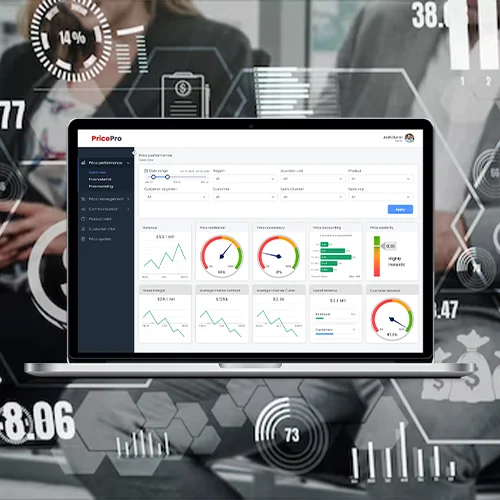
PricePro Supports Value Based Pricing in Live Commercial Decisions
• Guides pricing choices during active deals
• Applies rules where pricing is decided
• Integrates with CRM and ERP systems
• Controls approval authority and exceptions
• Protects pricing and margin data
• Gives leadership clearer visibility

What Weakens Value Based Pricing
Our Approach
The first step is finding where the current pricing model fails to reflect willingness to pay, where premium value is left on the table, and where pricing decisions are becoming too reactive.
Pricing structure, segmentation, metrics, and offer design are shaped around what customers value most and what the business needs to defend more effectively.
A value based pricing model has to survive live selling conditions. That means aligning pricing with how deals are discussed, approved, and negotiated in the market.
As the offer, market, and customer mix change, pricing discipline has to keep pace. Ongoing visibility and governance help prevent the model from weakening over time.
Why Clients Choose Acustrategy
Traditional Consulting Firms
• Heavy analysis before pricing changes reach the market
• Value work separated from deal execution
• Recommendations that lose force after delivery
• Limited involvement once strategy is presented
• Expensive teams with slower progress

Acustrategy
• Value based pricing designed for commercial use
• Direct access to senior pricing experts
• Stronger pricing logic shaped for execution
• Continued support after the initial strategy
• Built for companies under real growth pressure

FAQ
Yes. The point is not to force every customer into one value story. It is to understand where willingness to pay differs and build a pricing structure that reflects those differences without creating unnecessary complexity.
That usually means value has not been translated into a usable pricing model. Many companies can explain their value clearly yet still rely on instinct, discounting, or inconsistent decisions when prices are challenged.
No. It means pricing more intelligently. In some areas that may support higher prices. In others, it may mean redesigning the offer so value is easier to recognize and easier to monetize.
Yes. When the connection between value and price is stronger, pricing becomes easier to defend. That usually improves sales discipline and reduces the need to give away margin to keep a deal moving.
Yes. Different segments often perceive value differently. A strong model accounts for those differences while keeping the overall pricing structure controlled and commercially workable.
Not always. In many cases, the better move is to strengthen what exists, correct where value is being missed, and improve the parts of the model that are weakening pricing performance.
Early improvements often show up through better pricing consistency, fewer unnecessary concessions, and stronger positioning in deals. Margin gains follow as the business gets better at capturing the value it already creates.
It needs reinforcement. Governance, visibility, and clearer pricing decisions help keep the model relevant as the business changes, so value based pricing continues to influence real commercial outcomes.
