
Commercial strategy consulting
built around how you actually win business

Where commercial strategy usually comes apart
Commercial strategy consulting matters most where the parts of your commercial engine stop pulling in the same direction. Pricing points one way, sales comp rewards another, marketing leads with features while the offer is built on value, and packaging leaves the buyer guessing. Each function optimizes for its own number, and the growth that should compound leaks away in the gaps between them.
How our commercial strategy consulting works

We lead with pricing as the sharpest lever
Pricing is the clearest signal of value and the fastest thing to move, so we anchor the work in pricing strategy and extend outward to the rest of the commercial engine from there.

We get the functions telling one story
Sales, marketing, product, and finance are pointed at the same definition of value, so the strategy holds up when it reaches a live negotiation rather than falling apart at the deal.

We measure in growth, margin, and win rates
Commercial strategy only counts when it lands in the numbers. We connect each change to revenue, gross margin, and win rates, so leadership can see exactly what shifted and why.

We move at the speed a value creation plan demands
Operating partners and portfolio CEOs need traction inside the plan, not a multi-year program. We scope tightly and sequence the few changes that compound the fastest.

We hand back capability, not a retainer
When the engagement ends, the rules, decision rights, and reporting stay with your team. The commercial engine keeps its logic without us in the room.
What a commercial strategy engagement covers
Better Competitor Price Monitoring
- Pricing and packaging, and go-to-market reviewed as one connected system rather than separate projects
- Sales incentives and discount governance aligned so the comp plan rewards value, not volume
- Segmentation and channel strategy matched to how your buyers actually purchase
- A clear line drawn from each change to revenue, margin, and win rate
Who leads the work
- Senior operators who have run commercial functions, not a junior project team
- Direct collaboration with your sales, marketing, product, and finance leaders
- Experience across SaaS, services, and manufacturing commercial models
- Recommendations built to hold up with an investment committee and a sales floor alike
How we keep it grounded
- Scope kept tight so the commercial engine shifts in weeks, not quarters
- The tools, data, and teams you already have put to work rather than replaced
- Decision rights written down so ownership is clear across every function
- Progress read in commercial outcomes, not slides delivered
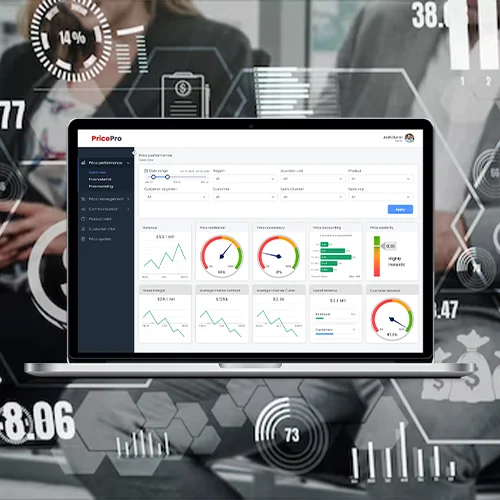
How PricePro supports commercial strategy
• Brings pricing and value guidance into the deal while it is still live
• Keeps pricing, margin, and performance data in one controlled place
• Connects to the CRM and ERP systems your commercial teams already run
• Applies pricing and discount rules at the point of quote
• Gives leadership a live view of how commercial decisions get made
• Holds decision rights and approvals where the strategy intends

What we usually find first
Our commercial strategy approach
We start by finding where the parts work against each other. Pricing, comp, packaging, and messaging that each make sense alone but quietly undercut growth once they meet in a deal.
We reset pricing, packaging, and incentives so they point at one definition of value, and so the offer is something your sales team can carry into a negotiation with confidence.
The strategy moves into quoting, approvals, sales enablement, and go-to-market motion, so it shapes daily decisions instead of sitting in a plan no one opens.
Review cadences and reporting keep the functions aligned and let the strategy flex as the market, the competition, and the portfolio thesis change.
How this differs from broad strategy consulting
A typical strategy project
• Months of analysis before anything in the business changes
• Growth addressed in the abstract, with pricing treated as an afterthought
• A polished plan that stalls in the handoffs between functions
• Recommendations delivered, ownership left open
• Large teams and timelines that outrun the value created

Working with Acustrategy
• A commercial engine that starts moving within the first weeks
• Pricing-first depth combined with real commercial breadth
• Every function aligned around one definition of value
• Senior involvement that stays until the change holds
• Scope sized for mid-market budgets and PE timelines

FAQ
It changes how your commercial functions work together. We align pricing, packaging, sales, and go-to-market around one view of value, so growth stops leaking in the gaps and starts showing up in margin and win rates.
We lead with pricing and monetization, the levers closest to revenue, then extend outward to the rest of the commercial engine. You get commercial breadth without losing the depth that actually moves the topline.
Between functions. Pricing, sales comp, marketing, and packaging each optimize for their own goal, and the contradictions surface in the deal. We make those trade-offs explicit and resolve them deliberately.
No. We work alongside them. The point is to align the leaders and teams you already have, not to run their functions or add headcount.
Pricing is the anchor. It is the clearest signal of value and the fastest lever to move, so we use it to set direction, choosing the b2b pricing models that match how you sell.
Alignment problems that slow deals tend to ease within weeks. Margin and win-rate gains follow as the commercial functions start pulling in the same direction.
No. The approach is built for mid-market organizations with lean teams. We simplify decisions, clarify ownership, and lend senior support so the strategy runs on the people you have.
Through governance and measurement. Clear decision rights, review cadences, and PricePro keep the functions consistent as products, markets, and the portfolio change.

