
Monetization strategy
built on the metric your customers value

Why the right price on the wrong model still leaks
Monetization strategy is the decision underneath your pricing: what you charge for and the metric you charge on, before any number is set. Most companies inherit that model rather than choose it, then spend years tuning price points on a meter that no longer fits how customers get value. When the model is wrong, even well-set prices leave money behind, because the thing you bill for and the thing customers value have drifted apart.
How our monetization strategy works

We start with the value metric, not the price
The meter you charge on shapes everything downstream. We find the unit that tracks the value customers receive, so growth in their usage shows up as growth in your revenue.

We match the model to how buyers actually buy
Subscription, usage, tiered, or hybrid, the right structure depends on your market. We choose among saas pricing models and B2B equivalents based on how your customers expand, not on what is fashionable.

We align the model with packaging
A monetization model only works if the pricing and packaging around it makes the choice obvious. We design tiers and bundles so customers land in the right place and grow from there.

We plan the move off legacy pricing
Changing the model means migrating an existing base. We sequence the shift so current customers move without churning and new logic takes hold without breaking trust.

We measure in expansion and retention
A monetization model proves itself in how accounts grow and stay. We tie the work to net revenue retention and expansion, the signals that show the meter is doing its job.
What a monetization strategy engagement covers
- The value metric your pricing should run on, chosen against how customers actually derive value
- The monetization model, subscription, usage, tiered, or hybrid, matched to your market and motion
- Packaging and tier design that make the model easy to buy and easy to grow within
- A migration path that moves the existing base off legacy pricing without triggering churn
Who you work with
- Senior operators who have built and changed monetization models, not a junior project team
- Direct collaboration with your product, pricing, finance, and sales leaders
- Experience across SaaS, services, and manufacturing revenue models
- Recommendations built to hold up with the board and on the sales floor
How we keep it practical
- Scope kept tight so the model is decided in weeks, not quarters
- The data and systems you already run put to work, not replaced
- Migration planned so revenue is protected while the model changes
- Progress read in expansion and retention, not slides delivered
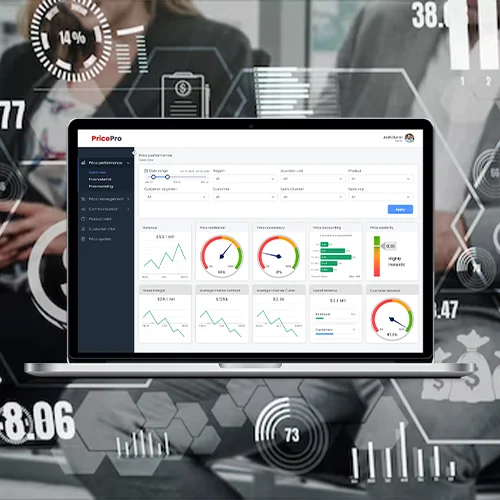
How PricePro supports your monetization model
• Puts the right price and packaging guidance in front of deals as they happen
• Keeps pricing, usage, and margin data in one controlled place
• Connects to the CRM and ERP systems your teams already run
• Applies the model’s rules and approvals at the point of quote
• Shows leadership how the model performs across segments and tiers
• Tracks expansion and migration so the model is managed, not just launched

What we usually find first
Our monetization strategy approach
We identify what customers are really paying for and the unit that best measures it, so the meter and the value finally line up.
We set the monetization model and the packaging around it as one decision, so the structure is coherent from the value metric down to the tier a buyer picks.
We sequence the move from legacy pricing, protecting revenue and relationships while the new logic takes hold across the base.
With the model running, we tune price points and tiers through price optimization, so the system keeps improving instead of going stale after launch.
Charging for the wrong thing versus charging on a value metric
A model that has drifted
• Billing tied to a unit customers no longer connect to value
• Price points tuned endlessly on a meter that no longer fits
• Expansion that lags the value customers actually receive
• Packaging that confuses the buyer rather than guiding them
• A model inherited years ago and never revisited

A model built on value
• A meter that rises as the value customers get rises
• A structure matched to how your market actually buys and expands
• Packaging that makes the right choice obvious
• A clean migration path off legacy pricing
• Revenue that grows with customer success, not despite it

FAQ
Pricing sets the number. Monetization strategy sets what you charge for and the metric you charge on, the model the price sits on top of. Get the model wrong and no amount of price tuning fixes it.
It is the unit you bill on, seats, usage, outcomes, transactions. The right one rises as the value a customer receives rises, so your revenue grows with their success instead of capping it or overcharging early.
Common signs are expansion that lags usage, constant discounting to win deals, and a model inherited years ago that no longer matches how the product is bought. These point to the model, not the price.
It can if handled carelessly, which is why migration is part of the work. We sequence the move so current customers transition without churning and the new model takes hold without eroding trust.
Yes. Services and manufacturing companies face the same question of what to charge for and how to meter it. The value metric and model matter wherever pricing can be structured rather than fixed.
Closely. The model decides the meter; packaging decides how it is sold and tiered. We design them together so customers land in the right tier and grow within it rather than stalling.
Model and packaging decisions can be made in weeks. The revenue effect builds as the new model reaches deals and the existing base migrates, then compounds through stronger expansion and retention.
Yes. When there is little or no data, we ground the model in willingness to pay and market evidence, so a new product launches on a monetization model built for how it will be used.

